Toyota Mobility Foundation, Biocon, and WRI India launch a tech-driven nudge program to encourage employees to make public transport the preferred choice for daily commuting
BENGALURU, INDIA
Kiran Mazumdar-Shaw unveils Biocon’s first-of-its-kind corporate commute nudge as part of Toyota Mobility Foundation and WRI India’s STAMP project to ease congestion and cut emissions.
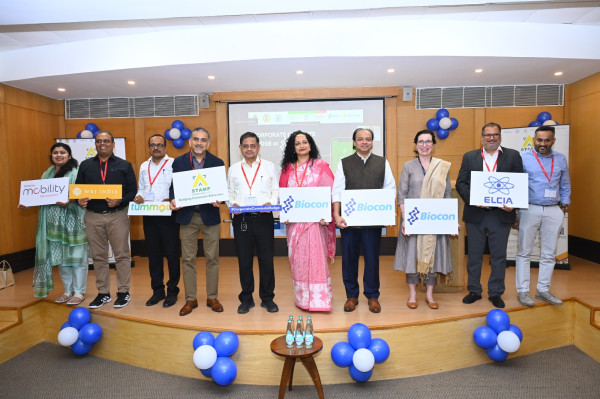
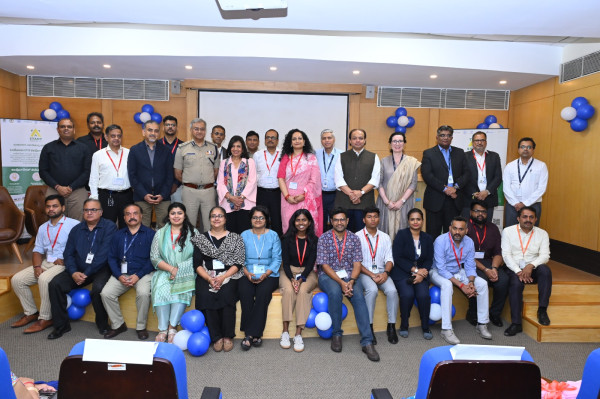
Biocon Chairperson Mrs. Kiran Mazumdar-Shaw today launched a high-impact Corporate Commute Nudge program aimed at reducing road congestion and vehicle emissions. Spearheaded by Toyota Mobility Foundation (TMF) and WRI India under the STAMP: Nudging Commuter Behavior initiative, and supported by Electronics City Industries Association (ELCIA), Bangalore Metro Rail Corporation Limited (BMRCL) and Bangalore Metropolitan Transport Corporation (BMTC), the program encourages employees to shift from private vehicles to public transport through a seamless end-to-end integration with the city’s metro and bus networks. The launch saw participation from representatives of the above organizations along with the Police Commissioner of Bengaluru Mr. Seemant Kumar Singh, IPS. While metro expansion has improved access, the larger opportunity lies in enabling smooth end-to-end commuting so that public transport becomes a reliable choice for everyday travel.
By leveraging a customized Mobility-as-a-Service (MaaS) platform through the Tummoc app, Biocon is helping remove traditional barriers to public transport use – prioritizing convenience, predictability and first- and last-mile connectivity. The initiative also serves as a call to action for Bengaluru’s corporate sector, demonstrating that industry-led behavioral shifts can play a critical role in building a less congested city.
Mrs. Kiran Mazumdar-Shaw, Chairperson, Biocon remarked, “I must congratulate WRI India and TMF for this important nudge program. The early findings are very encouraging and show that employees using the metro are experiencing a better quality of life, improved health indicators, and a far less stressful commute. The predictability, comfort and convenience of metro travel make it a compelling choice for daily commuting. We are already seeing strong uptake among Biocon employees, which reinforces the need to further improve frequency and last-mile connectivity.
Biocon has supported the development of the Biocon–Hebbagodi Metro Station on the Yellow Line of Namma Metro and taken steps to improve last-mile connectivity for employees and local businesses, while boosting economic opportunities in Anekal and nearby communities. This is a testament to the company’s commitment to advancing sustainable urban mobility and accelerating climate-resilient urban development.
“This is a truly important initiative because it does not just acknowledge Bengaluru’s traffic challenge, but works to solve it in a practical way,” said Mr. Seemant Kumar Singh, IPS. “We are already seeing the impact of better public transport integration, with an estimated 25–30% reduction in vehicles on the road following the launch of the Yellow Line. By encouraging greater use of the metro through targeted interventions, this initiative shows how simple, well-designed solutions can improve mobility, reduce congestion, and make the city more livable. I hope more companies and institutions come forward to adopt similar approaches.”
At the center of the initiative is the single interface Tummoc app, which enables employees to plan, track and pay for journeys across metro, bus and feeder services. The app brings together real-time information, integrated ticketing and connected mobility options, while also offering new business-facing features tailored to Biocon’s organizational and ESG requirements.
Developed in consultation with the Biocon team, and cleared by its IT Security and HR teams, the solution provides employees with a dedicated interface including gamification of commutes, usage trends and leaderboards. Furthermore, the app gives Biocon access to backend dashboards on commuting patterns, carbon dioxide savings and trends among users.
The initiative has already shown strong early traction. Around 6,000 metro tickets have been sold so far, while nearly 500 employees are using available feeder services daily. This uptake has been achieved even before financial incentives were introduced, signaling strong potential for sustained behavior change when public transport is made more seamless and accessible.
Mr. Maheshwar Rao, IAS, Chief Commissioner, GBA (and former MD, BMRCL) said: “Having been part of the STAMP Nudge program’s inception during my tenure at BMRCL, it is immensely rewarding to see it reach this scale with a global leader like Biocon. This is more than an announcement; it is a blueprint for the future of Bengaluru. By aligning corporate policy with city infrastructure, we are tackling congestion at its source. As we work to improve walkability and last mile connectivity across the city, I urge all corporate citizens to adopt this institutional approach and help us move Bengaluru toward a less congested, more livable future.”
By enabling employees to shift daily commute patterns at scale, the initiative is expected to reduce traffic congestion and transport-related emissions, while strengthening Biocon’s broader sustainability commitments. It also presents a scalable model for other employers seeking to align employee mobility with ESG and climate goals.
Underscoring the importance of such partnerships, Mr. Prasanna Ganesh, Executive Program Director, Toyota Mobility Foundation, said, “At Toyota Mobility Foundation, we believe that mobility solutions must be rooted in the everyday realities of people’s journeys. That is the reason that we have been running the STAMP project for over 10 years, supporting the integration of public transportation with innovative first and last mile solutions across multiple cities in India. This initiative shows how technology, partnerships and behavioral insights can come together to make sustainable travel more intuitive and more appealing. It also demonstrates how corporate leadership can help translate public transport investments into meaningful, everyday adoption at scale.”
Mr. Pawan Mulukutla, Executive Program Director, Integrated Transport, Clean Air and Hydrogen, WRI India, said, “Our STAMP research reveals that high-income commuters require targeted behavioural nudges to experience public transport and shift their travel habits. At WRI India, we believe in using commuter data and behavioural insights at scale to ease last-mile challenges, build more efficient urban mobility ecosystems, and drive progress on carbon emissions. This partnership with Biocon is a powerful example of that data-driven approach in action.”
Srinivas Alavilli, Fellow, WRI India, said: “The success of the Biocon launch proves that shifting commuter behavior is possible when you combine data-driven technology with strong corporate leadership. By bringing Tummoc’s MaaS platform into the corporate workflow, we’ve created a plug-and-play model that opens new avenues for public transport. Our goal now is to scale this across every corporate hub in India from BKC in Mumbai to the tech parks of Hyderabad, Delhi and Ahmedabad, and make public transport the most convenient choice for corporate commuters”
About the STAMP Innovation Challenge
As part of this broader initiative, from TMF and WRI India, this iteration of the Station Access and Mobility Program (STAMP) launched an innovation challenge on April 11, 2025, inviting startups, technology firms, and solution providers to co-develop scalable mobility interventions that can increase metro usage, especially in last-mile segments.
The challenge focused on solutions, incorporating:
- Gamification – Offering rewards and incentives for choosing low-carbon commuting
- Real-time Nudges – Deploying contextual, time-sensitive messaging to promote shared and efficient mobility.
- Inclusive Access – Improving first- and last-mile connectivity, affordability, and safety using commuter-centric behavioral cues.
Finalists received tailored support across three areas:
- Enterprise Enablement – Tools for pilot design, business model development, and stakeholder engagement.
- Exposure – Access to mentors, experts, and government stakeholders for guidance and
- Financial Support – Grants and awards for prototype development and
About Biocon Limited
Biocon Limited (BSE: 532523, NSE: BIOCON) is a global biopharmaceutical company driven by its purpose to provide affordable, life-changing medicines to patients worldwide. Headquartered in Bengaluru, India, Biocon addresses some of the world’s most pressing healthcare challenges across chronic and non-communicable diseases by offering both biosimilars and generics at scale across geographies. Through this diversified portfolio, Biocon focuses on areas of high unmet need, spanning key therapy areas including diabetes, oncology, obesity, cardiovascular diseases, immunology, ophthalmology, and bone health. The Company has pioneered several industry firsts that have helped shape the global biosimilars landscape. To date, the company has commercialized 12 biosimilar products and 30+ generic formulations globally. It has robust research and development pipeline of 20+ biosimilar assets, as well as GLP-1 peptides and other complex generics. With an integrated lab-to-patient model, Biocon brings together research and development, manufacturing, and commercial capabilities to ensure reliable and scalable supply of medicines. The company operates in more than 120 countries, supported by seven manufacturing sites, three R&D sites, 18 offices worldwide, and a workforce of over 9,500 employees. Biocon has been included in the S&P Global Sustainability Yearbook 2026 for the fourth consecutive year, underscoring its commitment to sustainable and responsible growth. Website: www.biocon.com Follow us on X: @bioconlimited LinkedIn: Biocon
About Toyota Mobility Foundation
Toyota Mobility Foundation (Chair Akio Toyoda) was established in August 2014 by Toyota Motor Corporation (Toyota) to support the development of a more mobile society in which everyone can move freely. The Foundation underscores Toyota’s ongoing commitment to continuous improvement and respect for people. It utilizes Toyota’s expertise and technologies to support strong mobility systems while eliminating disparities in mobility. TMF works in partnership with universities, governments, non-profits, research institutions and other organizations, creating programs that are aligned with the UN Sustainable Development Goals (SDGs) to address mobility issues around the world.
“TMF aims to create a truly mobile society that will help people live better lives no matter where they are,” said Chair Akio Toyoda.
About WRI India
WRI India, an independent charity legally registered as the India Resources Trust, provides objective information and practical proposals to foster environmentally sound and socially equitable development. Through research, analysis, and recommendations, WRI India puts ideas into action to build transformative solutions to protect the earth, promote livelihoods, and enhance human well-being. Know more:www.wri-india.org.