The Bangkok Metropolitan Administration and Toyota Mobility Foundation advances data-driven road safety innovation through the TRUST Project at the Environmentally Sustainable Transport (EST), Regional Meeting and Capacity-Building Workshop
BANGKOK, THAILAND
March 17, 2026

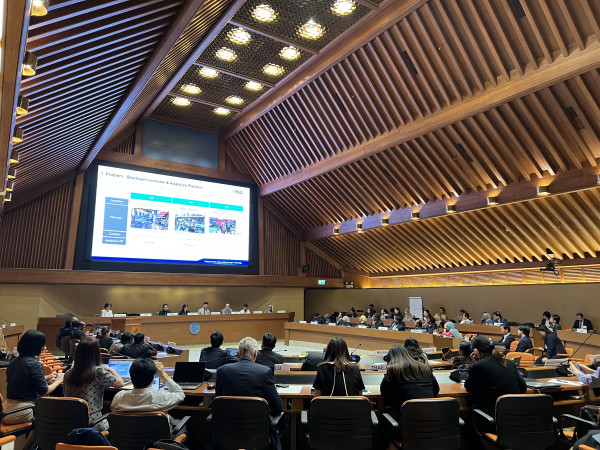
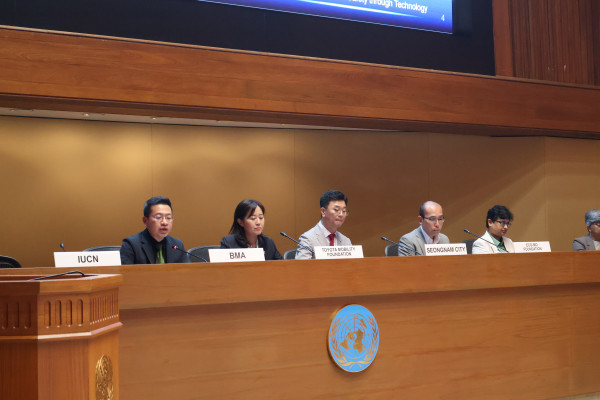
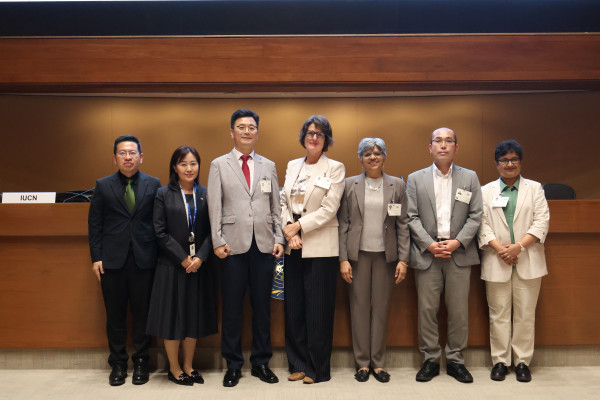
The Bangkok Metropolitan Administration (BMA) and the Toyota Mobility Foundation (TMF) presented Thailand’s initiative on “Thailand Road Users Safety through Technology (TRUST)” at the EST Regional Meeting held March 16-18, 2026, in Bangkok, Thailand.
Organized by the United Nations Centre for Regional Development - Department of Sustainable Development Goals / United Nations Department of Economic and Social Affairs (UNCRD-DSDG/UN DESA), the Ministry of the Environment of Japan, the Bangkok Metropolitan Administration (BMA), Thailand, the Asian Development Bank (ADB), and the Asian Infrastructure Investment Bank (AIIB) and the United Nations Economic and Social Commission for Asia and the Pacific (UN ESCAP), the EST Regional Meeting is aimed at accelerating implementation of the Aichi 2030 Declaration (2021-2030).
TMF and the BMA spoke at the session titled, “Shaping Safe, Secure and People-centered Urban Mobility for Livable Cities,” which aligned with the Aichi 2030 Declaration on Environmental Transport Goals 2 (Road Safety) and Goal 5 (Urban Access). The session also highlighted how Bangkok is leveraging technology, data analytics, and cross-sector partnerships to tackle one of the country’s most pressing urban challenges: road traffic fatalities.
Preventing Crashes Before They Happen
Despite significant improvements, Thailand continues to face high road fatality rates. In response, BMA has advanced a comprehensive Safe System Approach, combining infrastructure upgrades, enforcement, and cutting-edge data analytics. Recent actions include upgrading more than 2,000 crosswalks, installing over 100,000 LED streetlights, and reducing and enforcing urban speed limits through AI-powered CCTV systems.
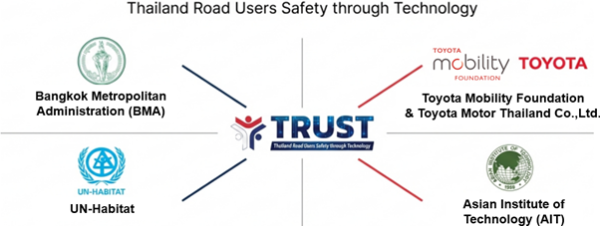
As one of the pillars of this effort, a data-driven approach project named “TRUST” was formally launched in April 2025 through a collaboration between TMF, BMA, UN-Habitat, Asian Institute of Technology (AIT), Toyota Motor Thailand (TMT), and the data support partner Road Accident Victims Protection Co., Ltd. (RVP).
The project utilizes systematic data collection, AI-based risk prediction, and spatial analytics to identify accident hotspots and risky behaviors before crashes occur.
Data-Driven Focus: Chatuchak as a Living Laboratory
Selected by the BMA for its relatively higher accident frequency, the Chatuchak district serves as the project’s pilot area. Detailed diagnostic analysis is currently underway at three critical sites:
- Wat Samien-Naree
- Ratchada Soi 32
- Ratchada-Ladprao Intersection
The High-Tech Behind Safety: AI and "Time to Collision" Analysis
To understand the root causes of accidents, BMA and TMF have installed CCTV systems at each site. Because every "blackspot" has unique road conditions, the project utilizes customized AI analytic tools to process video footage. Key technical highlights include:
- Predictive Heatmaps: By analyzing "Probe Data" (GPS data from vehicles), the team found that harsh braking patterns directly overlap with traffic conflict heatmaps. This allows authorities to identify potential accident sites.
- Precision Tracking: Using "Data from the Sky" (DFS) technology, the project captures metrics beyond human capabilities, including vehicle trajectories, speed, and Time to Collision (TTC), the precise timing of near misses.
- Identifying Root Causes: Preliminary data reveals that accidents are often caused by risky behavior e.g. lane changes, lane filtering and conflicts where vehicles enter or exit sub-roads.
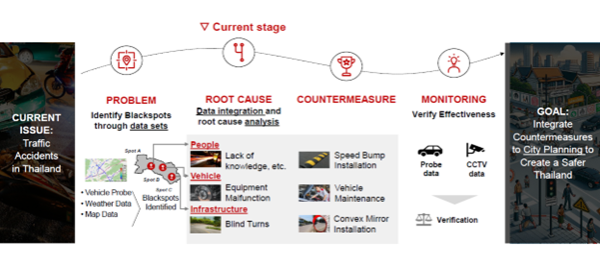
The TRUST project commenced its Phase 1 implementation in Chachoengsao Province, with a primary focus on piloting the use of vehicle probe data to analyze driving behavior and contributing factors to road accidents. Initial findings, however, indicated that additional datasets were required to enable a more comprehensive and accurate understanding of accident causes, leading to the launch of the TRUST Phase 2 project in Bangkok. Building on the project’s ongoing analytics work, Phase 2 focuses on translating evidence into action by pinpointing root causes of risk across human behavior, infrastructure, and vehicle-related factors, and effective countermeasures. This effort is further reinforced through complementary road safety awareness initiatives, supporting sustainable, long-term reductions in road traffic injuries and fatalities.
Remarks
Mr. Sayan Thasanakosol
Director of the Traffic Engineering Office
Traffic and Transportation Department, Bangkok Metropolitan Administration
“Road safety must move beyond awareness campaigns to intelligent, data-driven action. Through the TRUST Project, Bangkok is using AI, CCTV analytics, and spatial risk mapping to understand not only where accidents happen—but why they happen. Data allows us to intervene earlier, design safer streets, change behavior, and ultimately save lives. Our goal is clear: every journey in Bangkok should be safe, predictable, and people centered.”
Mr. Pras Ganesh
Executive Program Director, Toyota Mobility Foundation
“The Toyota Mobility Foundation operates according to three principles of innovation, partnerships and leaving a sustainable legacy. These principles are evident in our TRUST project. By harnessing data and AI technology, and collaborating with like-minded partners, this project not only aims to reduce accidents in Bangkok but also sets a ‘technology x human centric’ methodology for road safety enhancement in Asia and beyond. Our goal is to make a tangible difference in safety outcomes on the ground, ensuring safer mobility for all with our partners.”
The session reaffirmed Bangkok’s commitment to advancing safe, secure, and inclusive mobility while contributing to regional cooperation under the Aichi 2030 framework. By embedding data-driven innovation into urban governance, Bangkok is positioning itself as a leading city in shaping safer streets and livable communities across Asia and the Pacific.
About the TRUST Project
Evolving from the insightful discussions of mobility companies and organizations at the Tateshina Meeting in Japan, strategizing on road safety issues, the TRUST Project in Bangkok uses data-driven analytics and technology, to identify high-risk accident zones and unsafe driving behaviors with focus on the prioritized focus areas of human behavior, infrastructure and vehicle. The project is a joint initiative of TMF, BMA, TMT, UN-Habitat, AIT, and Thai RVP. Through this initiative, TMF, BMA and its partners aim to create a scalable model for road safety that can be piloted in Bangkok and replicated across Thailand to be shared globally.
About Toyota Mobility Foundation
Toyota Mobility Foundation (Chair Akio Toyoda) was established in August 2014 by Toyota Motor Corporation (Toyota) to support the development of a more mobile society in which everyone can move freely. The Foundation underscores Toyota’s ongoing commitment to continuous improvement and respect for people. It utilizes Toyota’s expertise and technologies to support strong mobility systems while eliminating disparities in mobility. TMF works in partnership with universities, governments, non-profits, research institutions and other organizations, creating programs that are aligned with the UN Sustainable Development Goals (SDGs) to address mobility issues around the world.
“TMF aims to create a truly mobile society that will help people live better lives no matter where they are,” said Chair Akio Toyoda.
About the EST Regional Forum
The Regional Environmentally Sustainable Transport (EST) Forum in Asia is a high-level intergovernmental platform that brings together policymakers, city authorities, development partners, academia, and the private sector to advance sustainable, inclusive, and low-carbon transport systems across the region. Established in 2005, the Forum supports countries in implementing the Aichi 2030 Declaration on Environmentally Sustainable Transport, which sets strategic goals for road safety, climate action, air quality improvement, and equitable urban access.
The EST Forum serves as a key regional knowledge-sharing and policy dialogue mechanism, enabling participating countries to exchange best practices, showcase innovative solutions, and strengthen cooperation toward achieving the Sustainable Development Goals (SDGs), particularly those related to road safety (SDG 3.6), sustainable cities (SDG 11.2), and climate action (SDG 13).